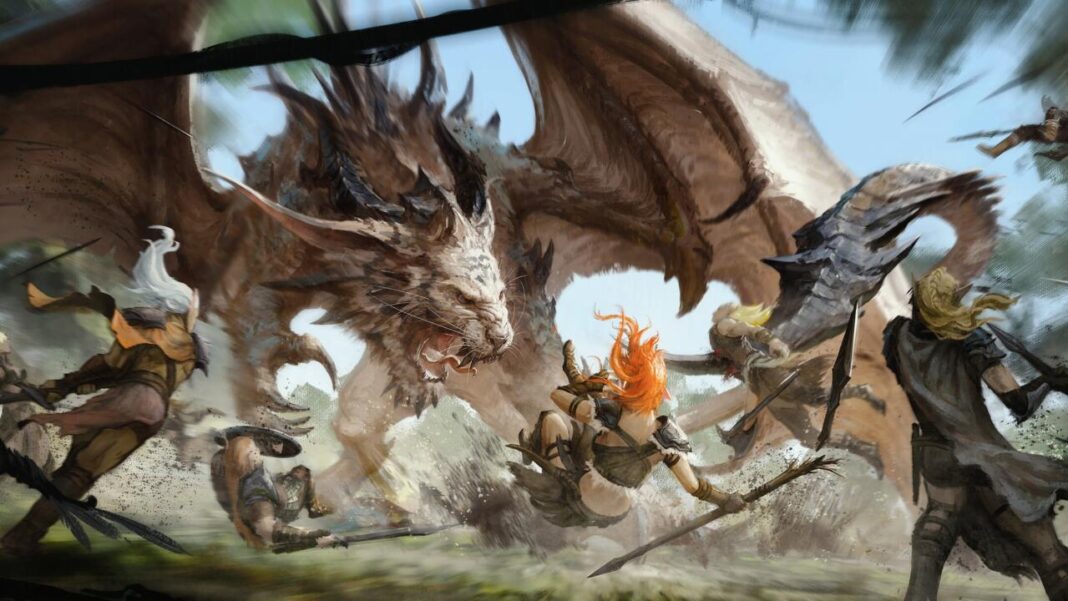
Dungeons & Dragons is practically synonymous with “tabletop role-playing games,” but sometimes you want something a little different. Or at least I do. And in the wake of Wizard of the Coast’s 2023 OGL fiasco, a ton of TTRPGs that are D&D-like but different in their own way popped up–Critical Role’s Daggerheart, Kobold Press’ Tales of the Valiant, The Arcane Library’s Shadowdark, Gila RPGs’ Dragon Slayers, and MCDM Productions’ Draw Steel, just to name a few. My favorite of the lot (so far–time and money prevents me from playing everything I want to try) is Nimble, which originally existed as an alternative ruleset for D&D 5e in 2023, but then it evolved into its own system in 2024 with a Backerkit crowdfunder that exceeded its $5,000 goal by over $260,000. Now, Nimble is on Kickstarter for a reprint and expansion, and it has overshot its $50,000 goal by $663,000 with a week to go (as of publishing this article).
Nimble is a system built on speed. It accomplishes this by being more efficient than a lot of other combat-driven TTRPGs. Just comparing it to D&D 5.5e, Nimble has four ability scores instead of six, and 10 skills instead of 18 (which is too many, WotC!). These changes make for a smaller and easier-to-track character sheet. This also makes it very easy to onboard new players, even if they’ve never played a TTRPG. Instead of keeping track of the pages of notes you’d need for something like D&D, Nimble only asks you to keep on top of what amounts to half a page of numbers when you’re first starting out. In Nimble, you can understand your character at a glance.
Combat is where Nimble really shines, though. There aren’t a ton of weapons and spells but each does something unique and is useful, and since initiative puts emphasis on the players going before enemy creatures and attacks almost always hit, every player feels suitably heroic whenever combat happens. A simple and easy-to-remember action economy and loosy-goosey handling of initiative order ensures the Game Master can keep battles feeling punchy and fast-paced as well, controlling the tempo of every scene and creating avenues for the players to be both creative and tactical. My biggest qualm with D&D, especially at the higher levels of play, is that a single combat encounter can last for three to four hours (sometimes longer!). In Nimble, the longest encounter I’ve ever had was an hour. I like having room for the exploration and social pillars in my sessions, which typically only last for three hours.
Continue Reading at GameSpot
🎁 You've Got 1 Reward Left
Check if your device is eligible for instant bonuses.